Founder & Inventor
Inventor of core patent-pending technology for a next-generation speaker company.
Lab Manager & Creative Technologist
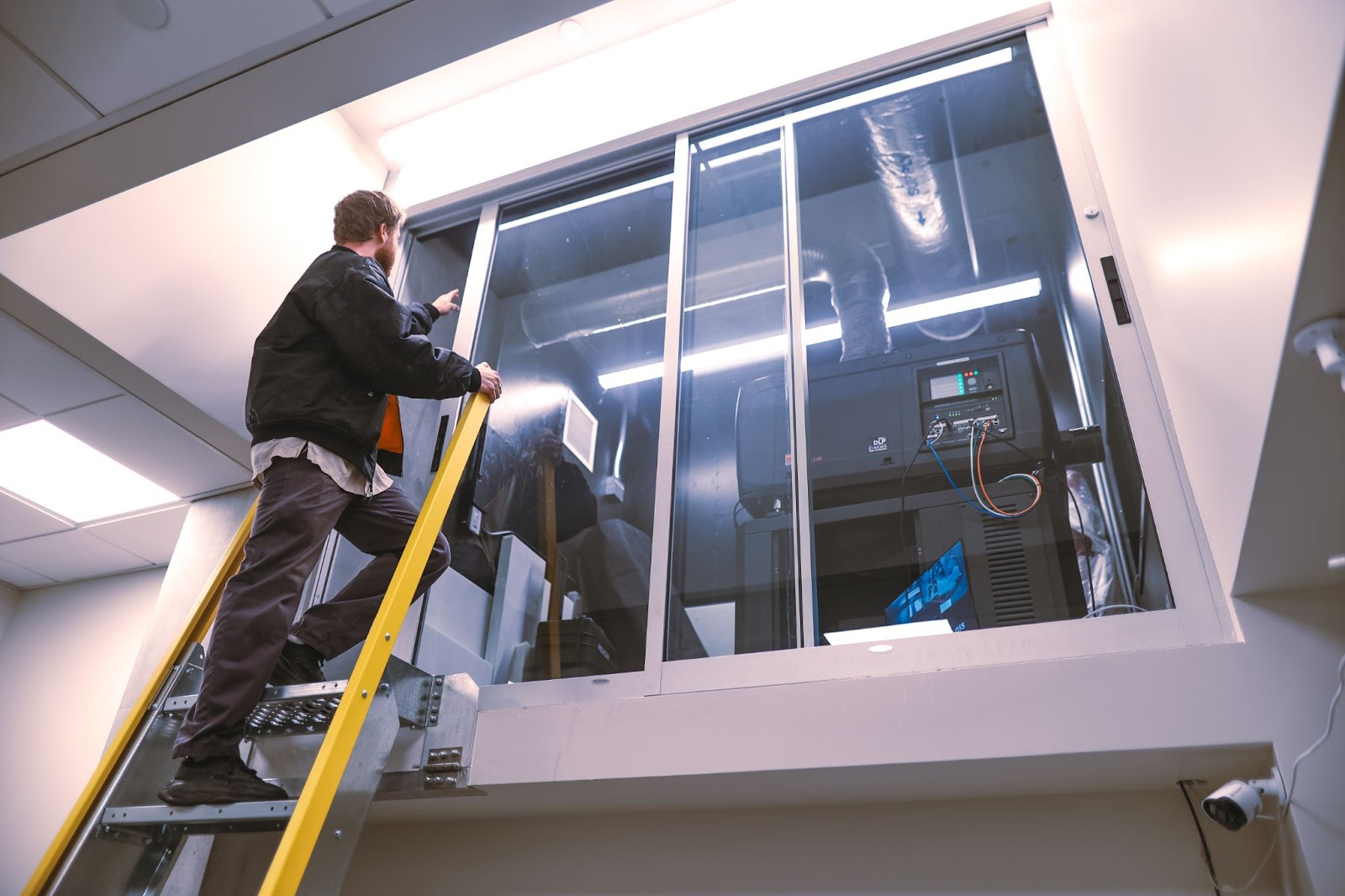
Lab Manager & Creative Technologist under Academy Award Winner, Jack Cashin
Computer Vision Lead
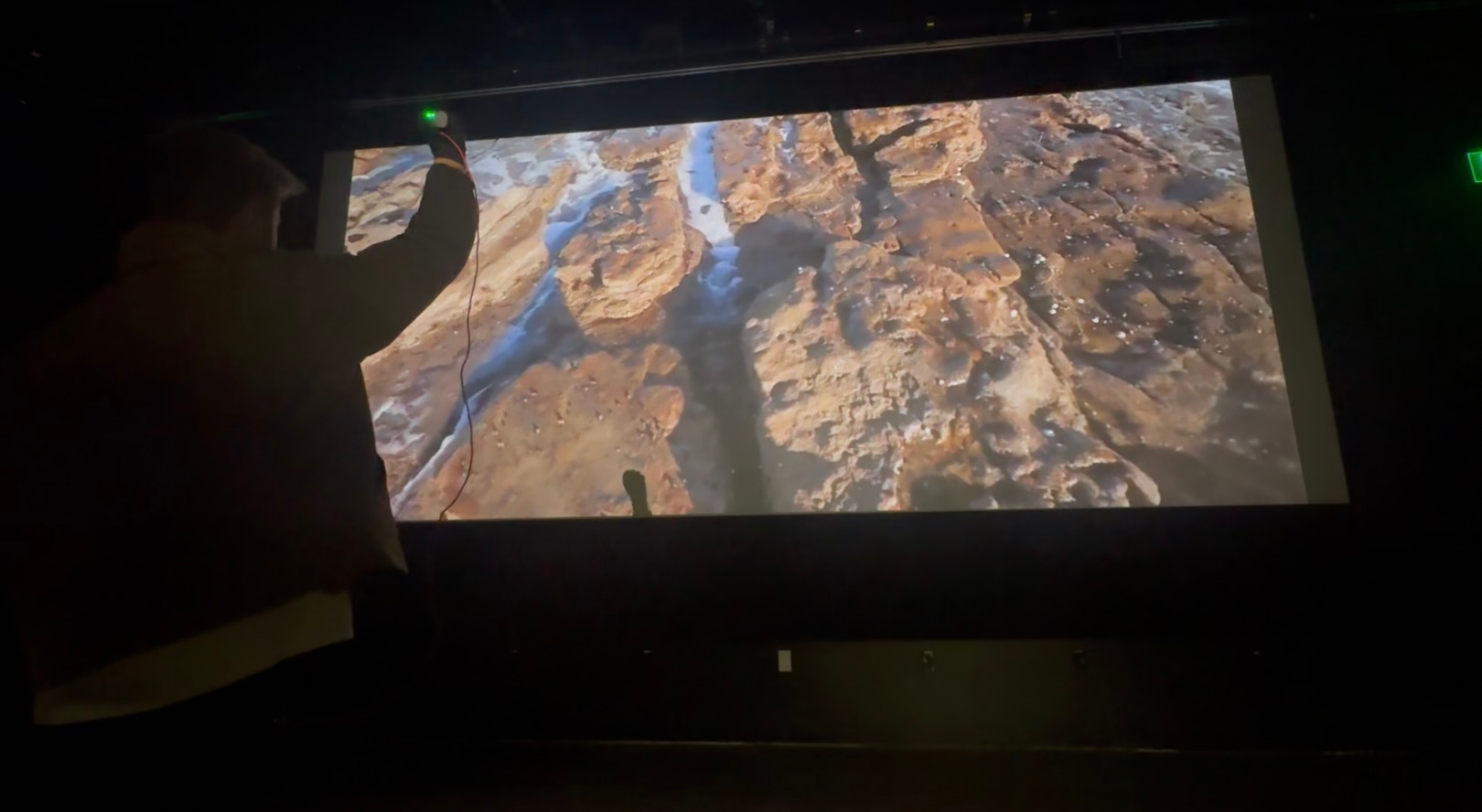
Lead computer vision engineer for international public event, turning a large format projector into an explorable world
Projection Mapping & Audio Systems
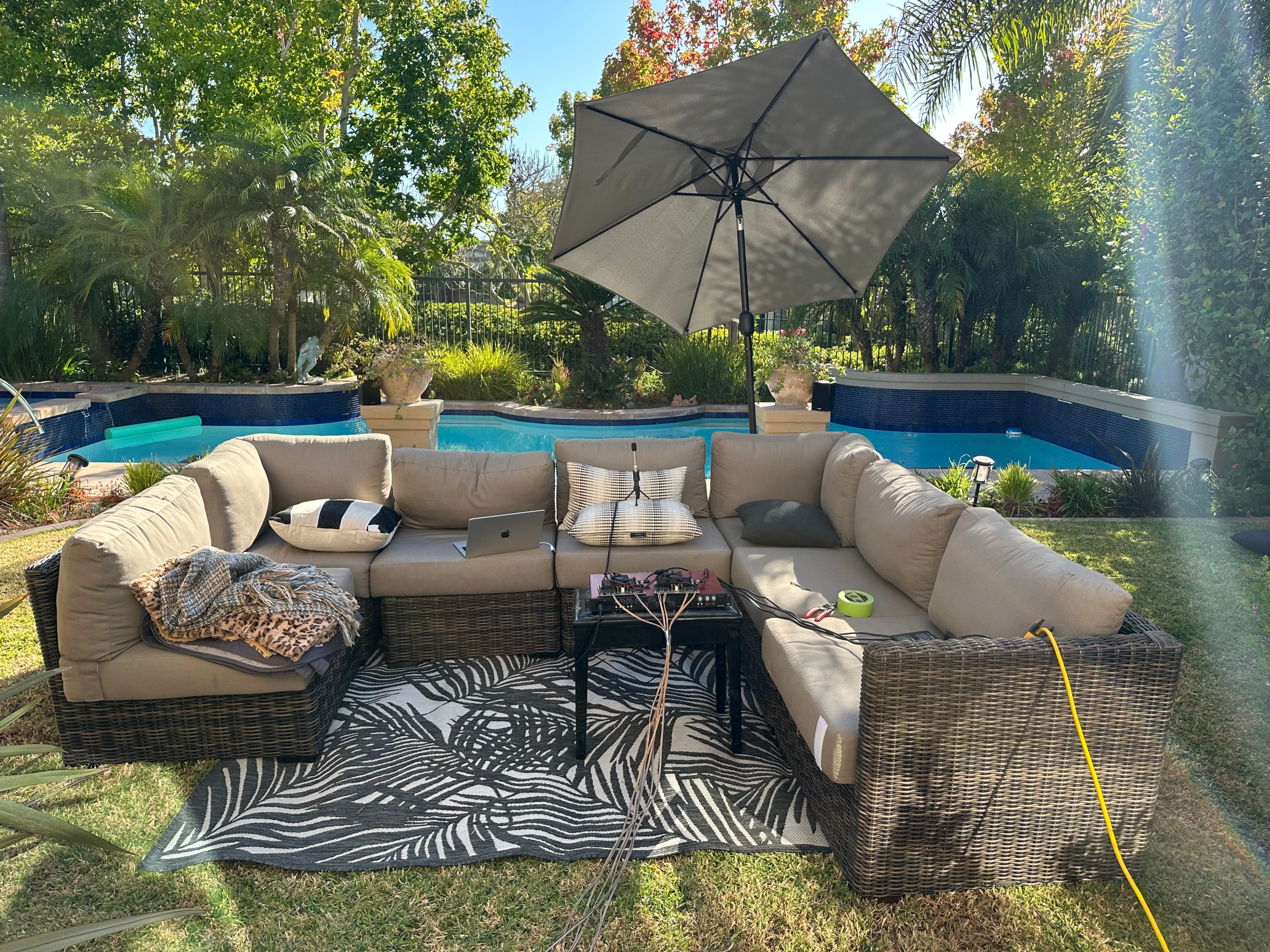
Custom screen, audio system, projection mapping for a reverse-projection showing of Fantastic Mr. Fox in a theatrical 7.1 audio channel up-mix
Animatronics & LLM Systems
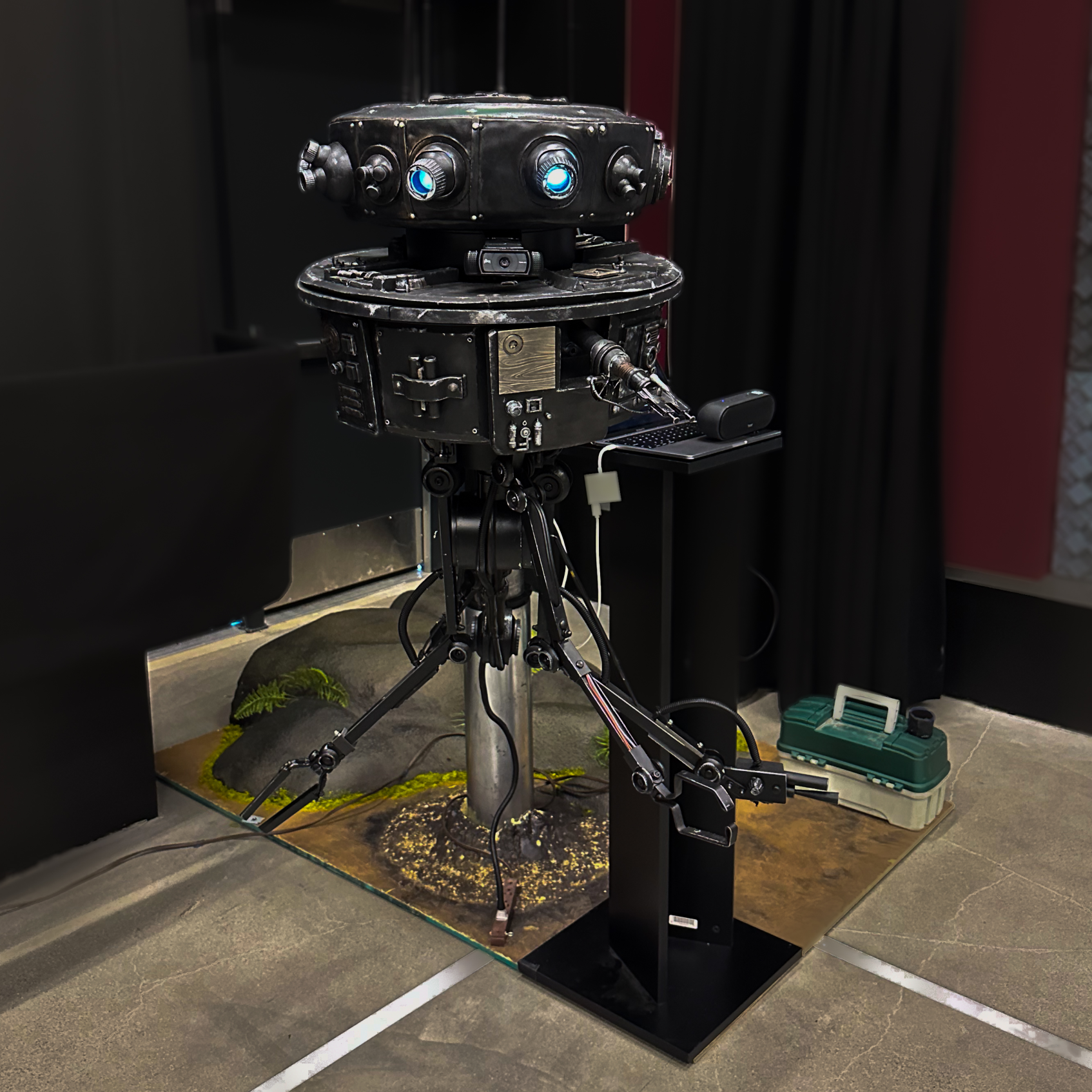
A Star Wars-inspired animatronic with face tracking eyes and LLM-enabled communication
Real-Time Writing Systems
A real time system-level editing assistant that automatically updates your writing to the desired tone as you go
Physics-Informed Neural Networks
A PINN-based deep learning formulation of the Gerchberg-Saxton algorithm for volumetric phase retrieval in immersive displays
Volume Rendering & Acoustics
OpenGL Volume Rendering Engine for designing visual displays and acoustic fields in immersive environments
Investigating high amplitude ultrasound’s effect on Varroa Destructor pests
Captured Performer Motion for Projected Digital Character Animation
R&D in sound-based levitation of objects in immersive displays
Entirely computer vision based control of computer, including cursor, keyboard, and scrolling
An Ubuntu Server Configuration for Remote Deep Learning Tasks
While living in India, managed a team of five PHD-Students in developing and shipping a mobile app
An oxidation-driven expansion rate in a layered titanium prosthesis for children with knee conditions
Researcher with Center for Social Action in Bangalore
An exploration of a selection of my photos chosen to tell stories.
Some of my favorite origami pieces: modern takes on an ancient art form with intricate design, a single piece of paper, and no cutting or tearing.
A collection of my abstract, impressionistic, and geometric ink drawings.
A collection of my digital art.
Mixed Media Limited Palette Figurative Impressions.
A rigorous work in modern metaphysical philosophy.
Ice picks, mules, and diseased glacial water.
A glimpse into my life in India at a local university, as a researcher, and mobile application team manager.
Scuba Diving, Drone Photography, Big Mountain Skiing, Climbing Mt. Fuji, etc.
Compassionate ∩ Curious ∩ Persistent ∩ Innovative ∩ Collaborative
Reverse Projection and 7.1 Surround Sound Outdoor Movie
Custom screen, audio system, projection mapping for a reverse-projection showing of Fantastic Mr. Fox in a theatrical 7.1 audio channel up-mix
Summary
I designed a reverse projection and 7.1 surround sound system for an outdoor movie showing. The goal for this project was to transcend the typical movie night experience, using light and sound in conjunction with the architecture of the house to turn the whole space into a storytelling medium.
I made use of the large center window, building a custom semi-translucent rear projection screen and installing it on the inside of the large window, and configuring a rear projector inside the house to display the image through the screen. The effect is as if the movie is being shown to you by the house- as if the scenes of the movie are happening inside the house itself.
I also configured a custom audio system and mix with a 5.1 to 7.1 up-mix, routed with Blackhole and Waveform and calibrated with REW. I chose 7.1 because the immersion of having both lateral speakers and rear speakers instead of one of the other is much higher, especially in an outdoor environment.
Key Contribution: Designed and deployed an immersive outdoor cinema experience that transformed a house into a narrative display using custom reverse projection and a calibrated 7.1 surround sound environment. Integrated visual illusion, spatial audio, and environmental constraints to create the perception that the film was unfolding within the architecture itself.
Skills
Immersive Environmental Storytelling ▪︎ Architecture Integrated Display Systems ▪︎ Illusion Design Using Light & Sound ▪︎ Audience-Centered Experience Design ▪︎ Reverse Projection ▪︎ Surround Sound System Design ▪︎ Psychoacoustic Design for Outdoor Environments ▪︎ Real-Time Audio Routing & Processing ▪︎ End-to-End Audio-Visual System Integration ▪︎ Show Critical Technology Design and Operation ▪︎ Impulse Response Measurement and Calibration (REW, Waveform 13)
Highlighted Role
Details:
Reverse Projection
Using reverse projection eliminated the visual distraction of a projector in front of the viewing area and created the effect of having it feel as if the house is showing you the movie.
Rich Colors of Reverse Projection
Unfortunately (or fortunately) no one was using their phone during the movie and happened to take a picture. In 2025, I consider this a huge accomplishment, if a slight let down for making this page.
The semi-translucent screen was mounted onto a custom frame built with Home Depot yard sticks, fixed with L-brackets. The simple design also incorporated some metric bolts so that the screen could easily be taken down and set back up.
The Screen
Projection
Projection design is an important consideration for a reverse projection movie showing. For one, the projector must be positioned either above or below the viewing angle, otherwise the bright light of the lens will be visible as a bright spot in the screen. This necessitates some basic projection mapping with a relatively short throw projector and keystone tuning to compensate for the angle. Basic color grading and light design were also done, along with designing the bathroom route to prevent any internal light in the house.
From a technical standpoint, the reverse projection is a simple, reliable and beautiful technique. It was well appreciated and commended as a uniquely immersive experience.
Audio Mixing and Calibration
When I set up a surround sound system for a lay audience (or sometimes even a professional one) there only two metrics I believe matter deeply- clarity and immersion. Both are somewhat subjective, but there are efforts that can be made to increase both for anyone.
Routing- Blackhole 16ch
The workhorse of this setup was a MacBook Pro M3 Max. Thus, there needs to be a way to pick up the system audio for processing and routing. The software that accomplishes this best is Blackhole 16ch, a virtual audio driver that can listen to system audio. This software is what makes the routing and processing available to Waveform 13.
Audio Mix- Waveform 13
The Waveform 13 program takes as input the output from Blackhole 13, applies processing live, and outputs the result to the hardware.
The audio mix is relatively simple. The 5.1 bed mix is up-mixed to a 7.1, with the left and right lateral speakers sharing the load of the front and rear speakers on their side. The delay is calibrated within a millisecond at the primary listening position- so every speaker’s sound arrives at almost the exact same time. Convolution is used with the impulse response of the filters generated by REW to a house curve which focusses on deep bass and warm mid tones, enhancing clarity and producing theater-like rumbling.
7.1 Channel Speaker Placement
The 7.1 channel setup was chosen over a 5.1 to increase immersion by including both rear and lateral speakers. This is especially helpful in a larger outdoor space due to off-axis attenuation.
In order to maximize the optimal listening area size, the speakers were placed a maximum distance away from the area- around 15 feet in each direction. This aids in providing relatively small listening differences between sitting on either side or the center on the couch.
Audio Calibration- REW
The audio calibration was conducted with a Behringer calibration mic, the Focusrite 18i20 USB audio interface, and REW (Room EQ Wizard). I employed iterative impulse and frequency response tests, determining the delay between speakers manually and outputting an impulse response of the generated EQ filters to be convolved with the live sound in Waveform 13.
In essence, this process aims at aligning each speaker with each other and in improving their individual accuracy.
Hardware- Focsurite 18i20 and Amp Boards
The information flow of the sound begins with the source material on the MacBook Pro, is routed internally through Blackhole and Waveform 13, out to the Focusrite 18i20 USB audio interface, and out to multichannel amplifier boards for each respective channel. The Focusrite was chosen for maximum control over the outputted the sound, and the Class D amplifier boards are excellent mid to high power boards with high clarity and low distortion. Though Class D amplifiers can have a slight hiss when playing no sound, this effect is less pronounced in this particular model (technically a Class T) and much less noticeable outside, so the experience for the guests is unaffected.
While it is often said that sound design is at its best when no one notices it, I think this is only half the picture. To me, sound design is at its best when no one notices how much it is moving them and their experience of what they’re watching.
You may also be interested in:
Ocean Site One
Lead Engineer for an International Event, Turning a Large Format 360° Video into a Touchscreen-Like Explorable World Using Computer Vision
F.R.I.D.A
A Star Wars-inspired animatronic with face tracking eyes and LLM-enabled communication
R&D Movie Studio Manager
Lab Manager & Creative Technologist under Academy Award Winner, Jack Cashin
Founder
Inventor of Core Patent-Pending Technology of a Speaker Manufacturing and IP Company