Founder & Inventor
Inventor of core patent-pending technology for a next-generation speaker company.
Lab Manager & Creative Technologist
Lab Manager & Creative Technologist under Academy Award Winner, Jack Cashin
Computer Vision Lead
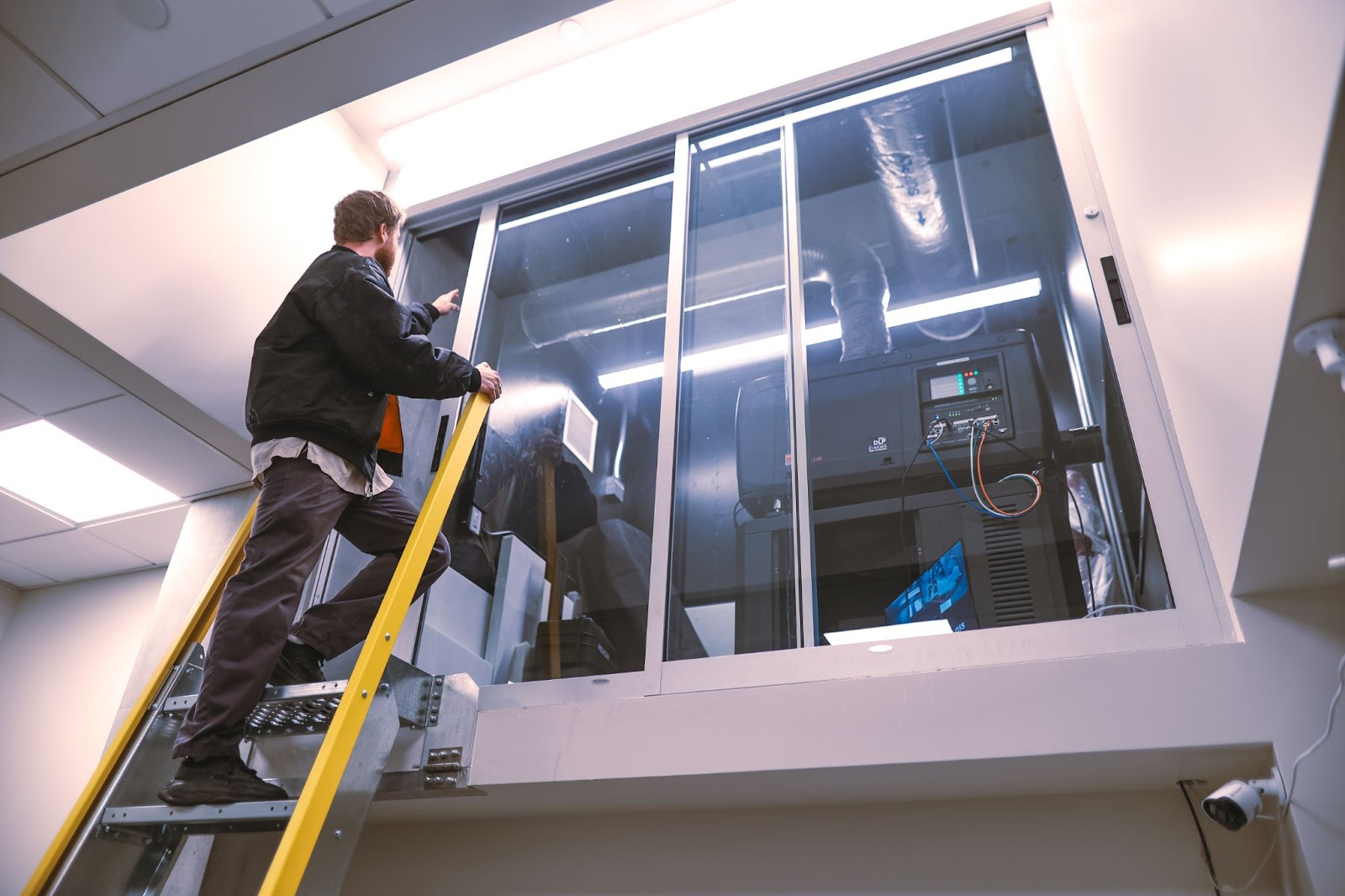
Lead computer vision engineer for international public event, turning a large format projector into an explorable world
Projection Mapping & Audio Systems
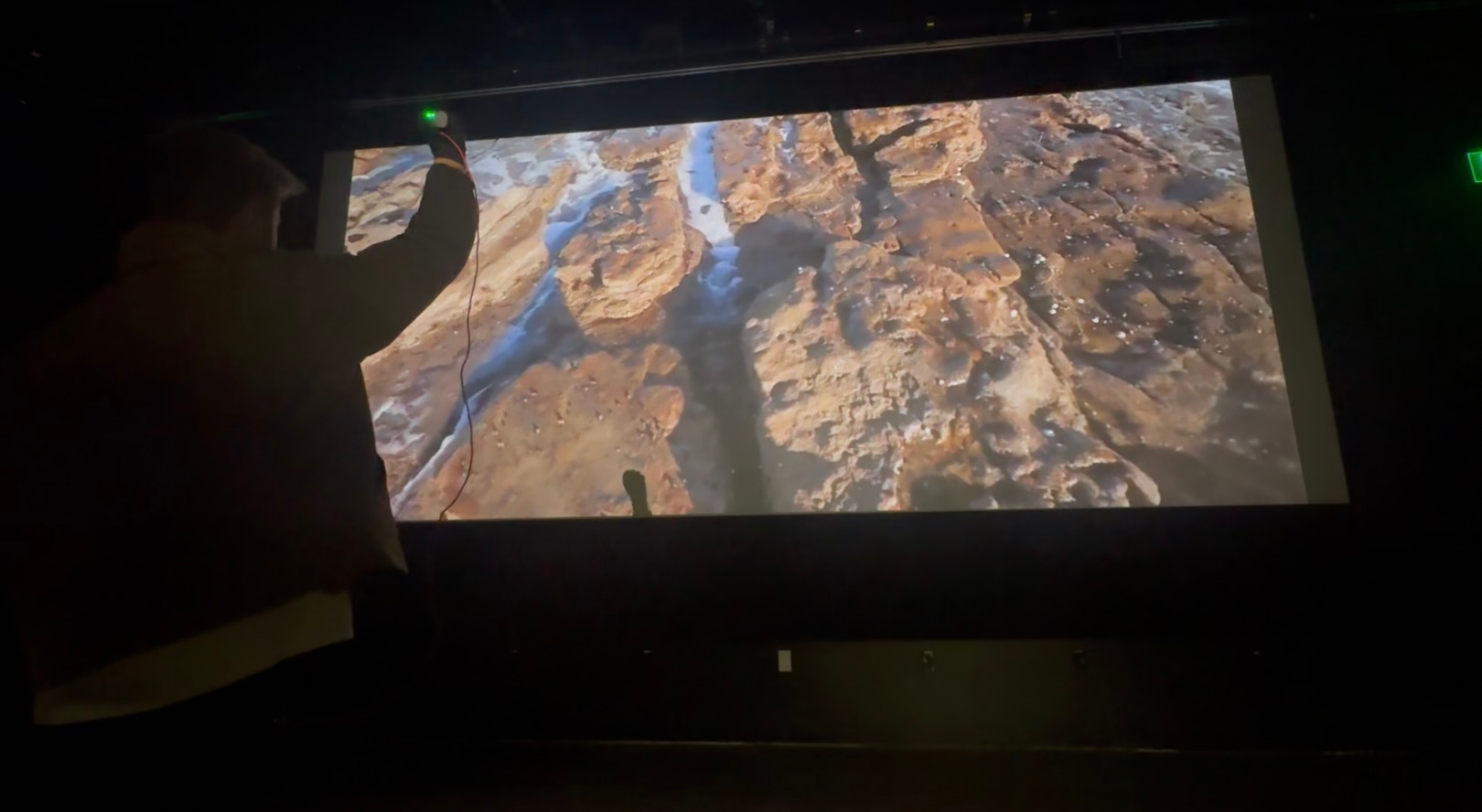
Custom screen, audio system, projection mapping for a reverse-projection showing of Fantastic Mr. Fox in a theatrical 7.1 audio channel up-mix
Animatronics & LLM Systems
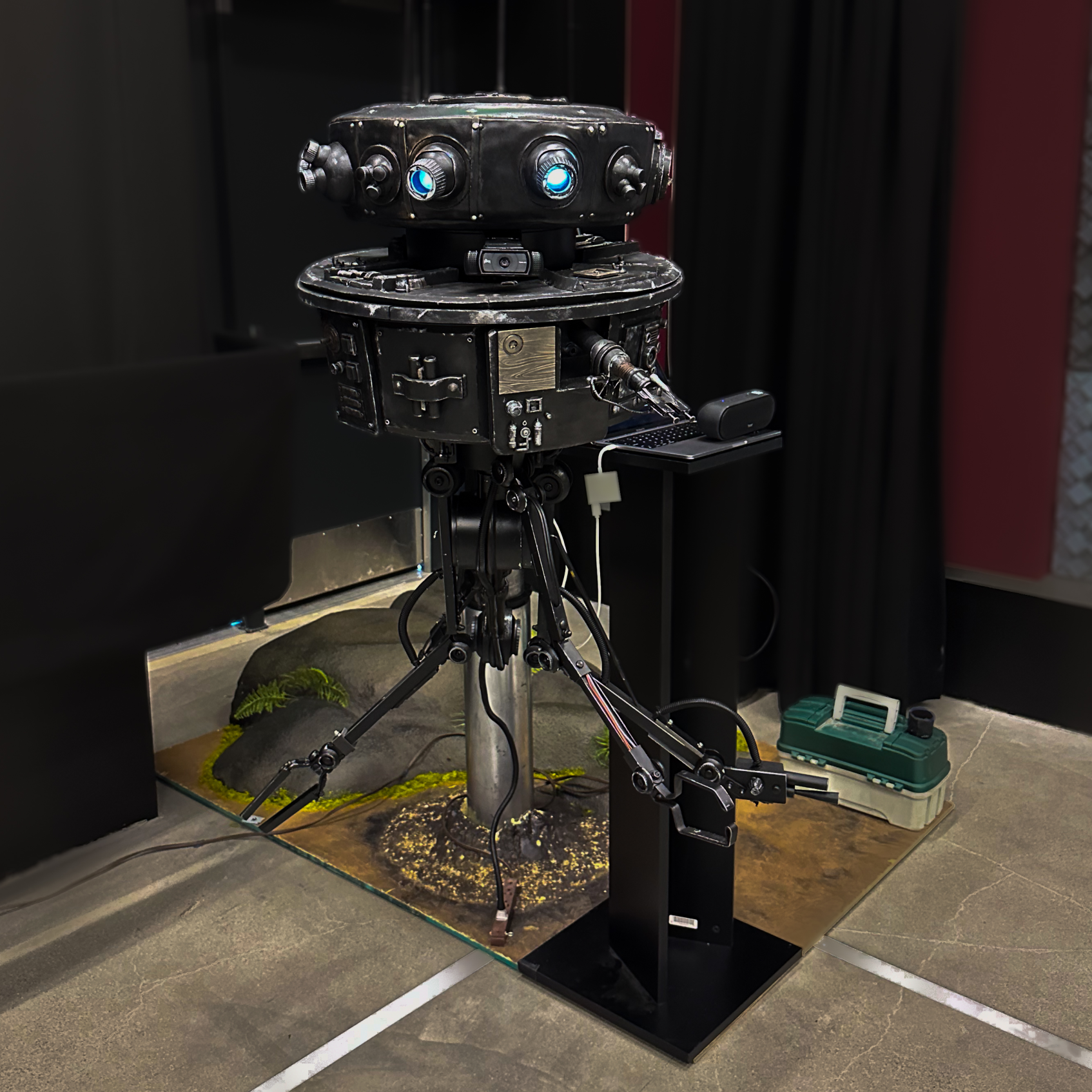
A Star Wars-inspired animatronic with face tracking eyes and LLM-enabled communication
Real-Time Writing Systems
A real time system-level editing assistant that automatically updates your writing to the desired tone as you go
Physics-Informed Neural Networks
A PINN-based deep learning formulation of the Gerchberg-Saxton algorithm for volumetric phase retrieval in immersive displays
Volume Rendering & Acoustics
OpenGL Volume Rendering Engine for designing visual displays and acoustic fields in immersive environments
Investigating high amplitude ultrasound’s effect on Varroa Destructor pests
Captured Performer Motion for Projected Digital Character Animation
R&D in sound-based levitation of objects in immersive displays
Entirely computer vision based control of computer, including cursor, keyboard, and scrolling
An Ubuntu Server Configuration for Remote Deep Learning Tasks
While living in India, managed a team of five PHD-Students in developing and shipping a mobile app
An oxidation-driven expansion rate in a layered titanium prosthesis for children with knee conditions
Researcher with Center for Social Action in Bangalore
An exploration of a selection of my photos chosen to tell stories.
Some of my favorite origami pieces: modern takes on an ancient art form with intricate design, a single piece of paper, and no cutting or tearing.
A collection of my abstract, impressionistic, and geometric ink drawings.
A collection of my digital art.
Mixed Media Limited Palette Figurative Impressions.
A rigorous work in modern metaphysical philosophy.
Ice picks, mules, and diseased glacial water.
A glimpse into my life in India at a local university, as a researcher, and mobile application team manager.
Scuba Diving, Drone Photography, Big Mountain Skiing, Climbing Mt. Fuji, etc.
Compassionate ∩ Curious ∩ Persistent ∩ Innovative ∩ Collaborative
Ultrasound for Colony Collapse in Bee Hives
Investigating high amplitude ultrasound’s effect on Varroa Destructor pests
Summary
This is a research project I conducted in association with California Bee Company on their bee hives. Colony Collapse Disorder (CCD) is a phenomenon in which entire colonies of bees die. Despite a decrease in media attention over the last decade, this is still a highly prevalent problem threatening the core of our agriculture industry. It is not dramatic to say that if bees go away, most of us will die of famine- not to mention the general ecological impact. I was working with ultrasound at the time and learned that in the past, ultrasound had been used to treat one of the postulated causes of CCD in California, Varroa Destructor Mites. These mites latch on the the body of bees, and they are unable to remove them.
Past methods using ultrasound on bees used highly diffusely propagating transducers with single frequency sine waves. They were largely unsuccessful, leading to several expired patents and an abandonment of the practice. This research focussed on the effects of non-invasive concentrated ultrasound, both modulated and unmodulated by other frequency components. The results were mixed, and more experimentation with placement, power, and duration of the ultrasonic transducers is warranted.

Key Contribution: Designed and conducted real-world ultrasonic phased array experiments in commercial beehives, identifying practical constraints in power delivery, hive acoustics, and exposure timing while demonstrating no adverse effects on hive health.
Skills
Custom Test Apparatus Design ▪︎ Rapid Iteration Under Field Constraints ▪︎ Field Research ▪︎ Experimental Protocol Design ▪︎ Ultrasound Systems ▪︎ Frequency and Amplitude Modulation ▪︎ Applied Bio-Acoustic Research ▪︎ Cross-Disciplinary Collaboration (Industry + Field Experts) ▪︎ Safety & Ethical Considerations in Experimental Work
Highlighted Role
Details:
Research Outline
This is the outline of the research plan I created and conducted, approved by California Bee Company. Note that this research was conducted in a commecial setting and is set to slightly different standards than acedemia.
Objective
This project will investigate the holistic affect of ultrasound on the harmful Varroa Destructor mites in commercial beehives. Specifically, this work will iterate on the paper “The use of airborne ultrasound for Varroa destructor mite control in beehives,” published out of University Cork College in 2018, but will instead use a many-transducer system—referred to herein as an Ultrasound Phased Array (UPA).
Goals
The goal of this research project is the identification of a possible use case for ultrasound in beehives. Specifically, this research will yield answers to the following questions:
Methodology
In order to determine if an answer to any of the above questions is present, several groups of beehives will be required: a control group (1–3 hives), Experimentation Group 1 (3–8 hives), and Experimentation Group 2 (3–8 hives).
The groups are outlined as follows:
Control Group:
Hives have no exposure to ultrasound.
Experimentation Group 1:
Hives are exposed to a UPA operating at 40 kHz with no amplitude modulation.
Experimentation Group 2:
Hives are exposed to a UPA operating at 40 kHz with amplitude modulation.
All groups will have a mite infestation.
Ultrasound Application
The UPA will be applied to the experimentation groups through the top of the hive, with exposure intervals ranging from 30 seconds to 5 minutes. The results will attempt to show a correlation between application time and mite drop.
Measurement
This research will employ two measures of success:
The holistic measures will be evaluated on a scale of 1–10 (1 = poor, 10 = excellent) and will include the following questions:
These questions will be answered twice: once at the beginning and once at the end of a three-week period.
Similarly, mite drop boards will be placed and measured at the beginning and end of the experimentation period.
Documentation and Conclusion
This research plan was carried out with an initial testing apparatus consisting of a parametric speaker with an external DC power supply, a custom ultrasound phased array, a computer, and custom screened national beehive bottom boards.
I then removed several frames from the beehives and applied the ultrasound with the parametric speaker’s power supply connected to an external DC power bank. While some mite drop was observed—mites falling off the bees in the hive and onto the bottom boards—the results were largely mixed, though notably, there were no adverse effects on hive health.
Holding a Frame from a National Bee Hive
Worker bees are generally docile and are ambivalent to the large mammal poking and prodding them.
The Smoker Used to Make the Bees Docile Before Working with Them
On one notable day in the field, I did not have access to the smoker… the result stung quite a bit.
The Testing Apparatus and Equipment
Computer, ultrasound apparatus, 120V portable power supply, screened mite drop boards
The Ultrasound Apparatus Applied to a National Bee Hive
Power delivery and hive acoustics became pertinent questions very quickly. The latter, at least, requires further research.
A Mite Drop Board Pulled from Under a Bee Hive
Bees are fastidious, readily removing all unwanted items from the hive- often through the bottom.
The main obstacles encountered were power delivery and poor a priori knowledge of the acoustics of the beehive. Likely, future work will require the development of a hive frame with an ultrasound device built directly into it, or a bottom board that applies ultrasound through the bottom of the hive.
You may also be interested in:
Acoustophoresis: Acoustic Levitation in Volumetric Displays
R&D in sound-driven object levitation for immersive spaces
Founder
Inventor of Core Patent-Pending Technology of a Speaker Manufacturing and IP Company
Micro-Financing Researcher: Bangalore, India
Researcher with Center for Social Action in Bangalore
‘Deep Gerchberg-Saxton’: A Physics Informed Neural Network Architecture
A novel deep learning approach to Volumetric Phase Retrieval problems; applied to immersive displays